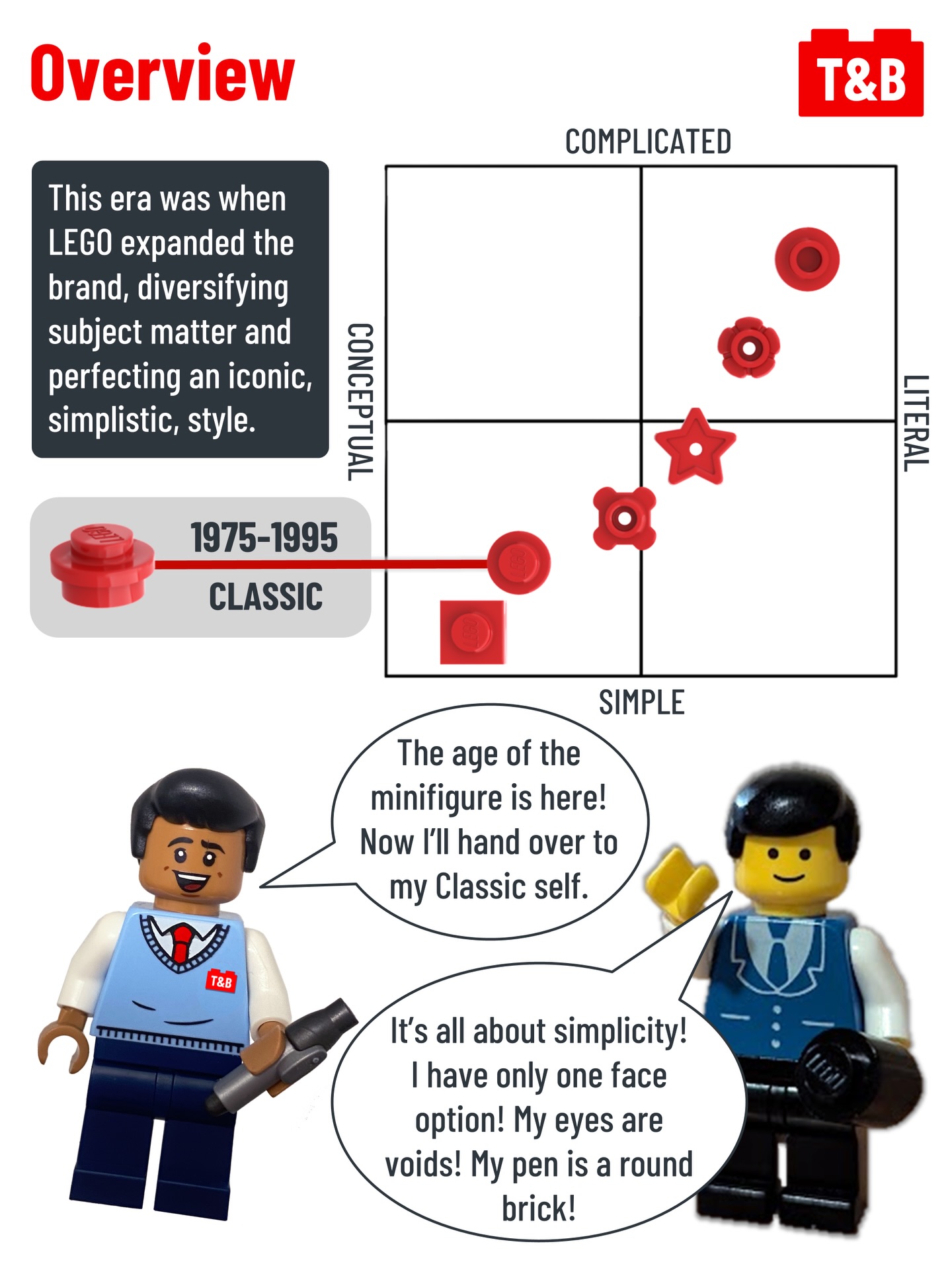
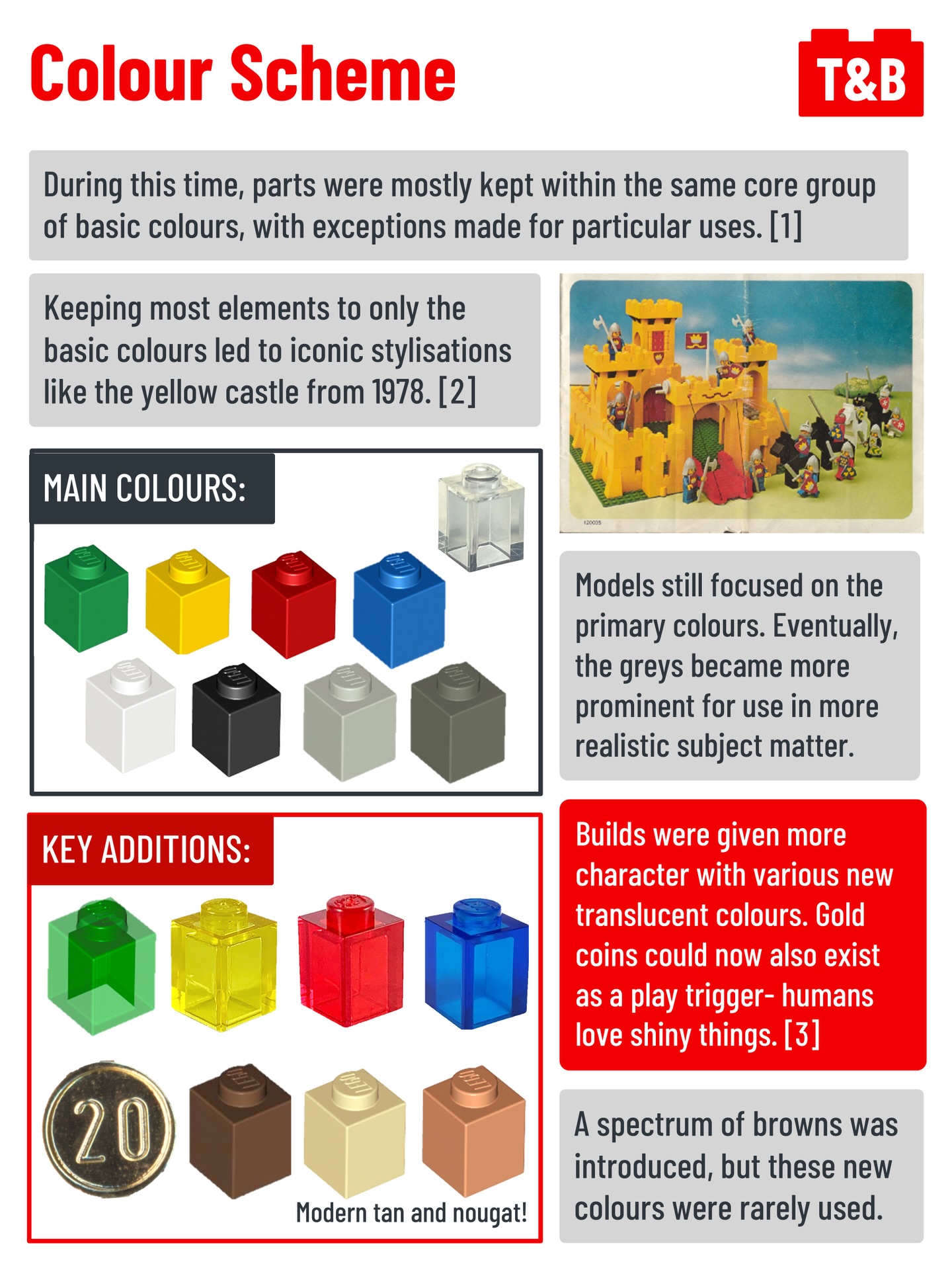
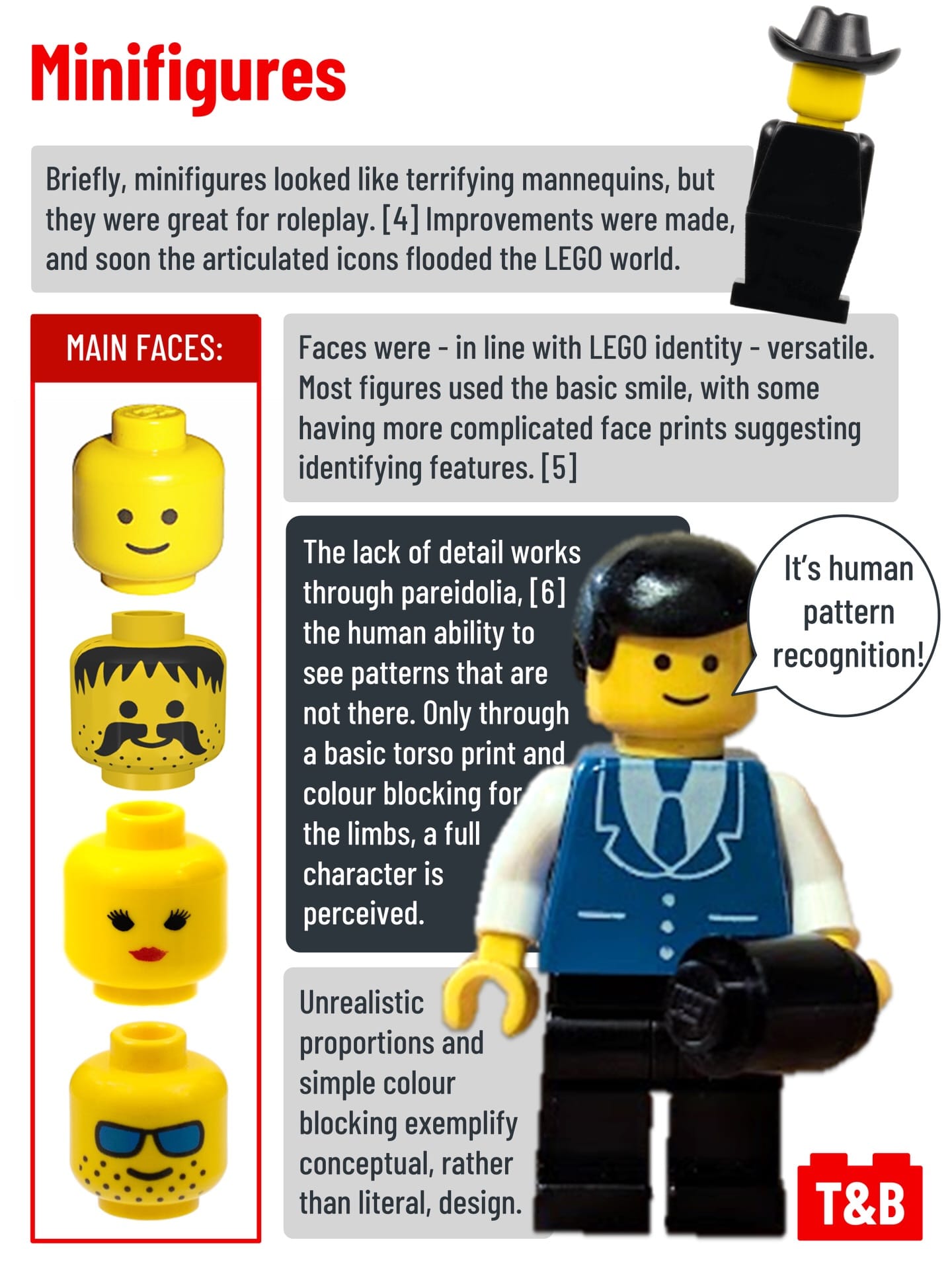
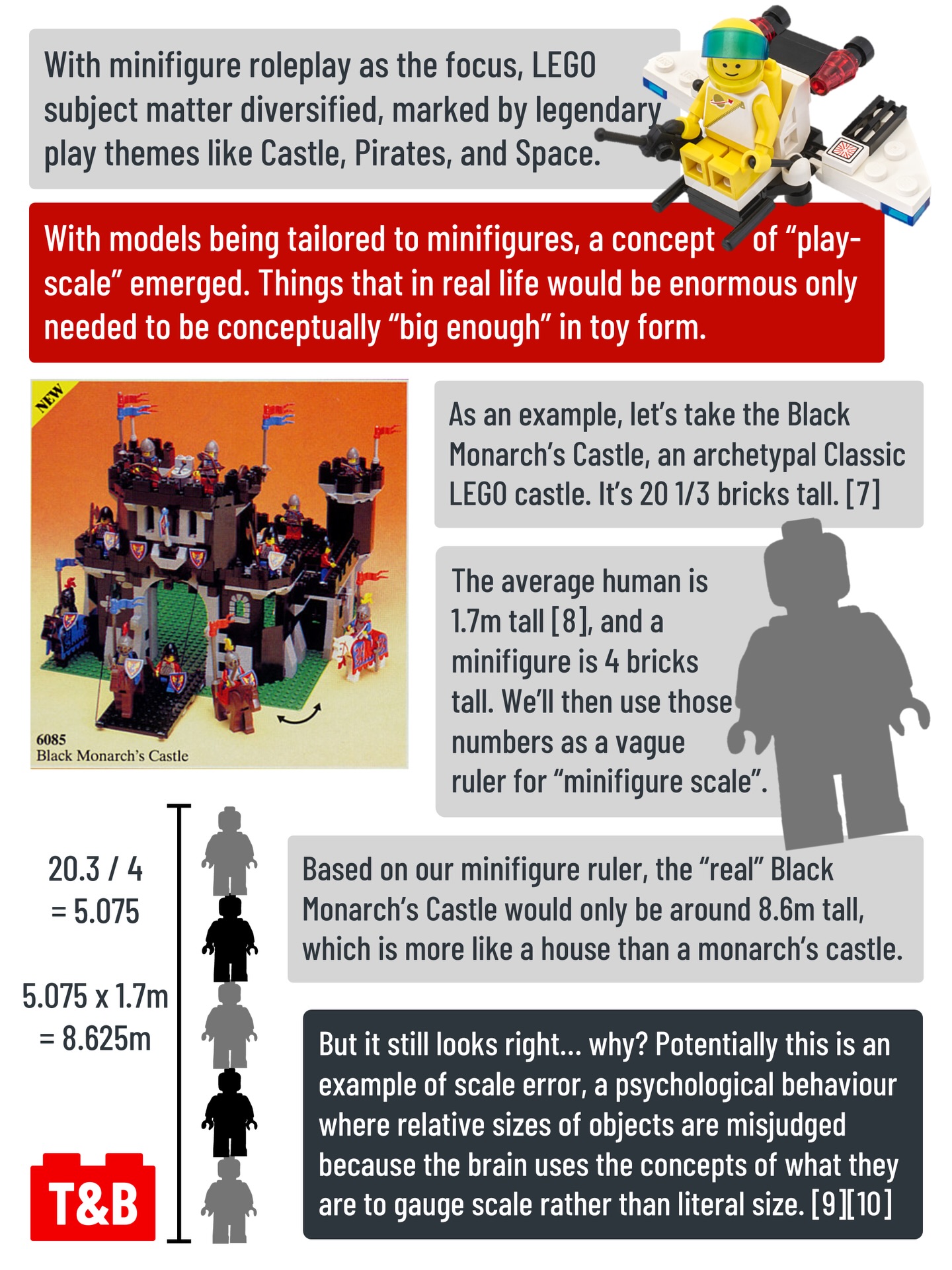
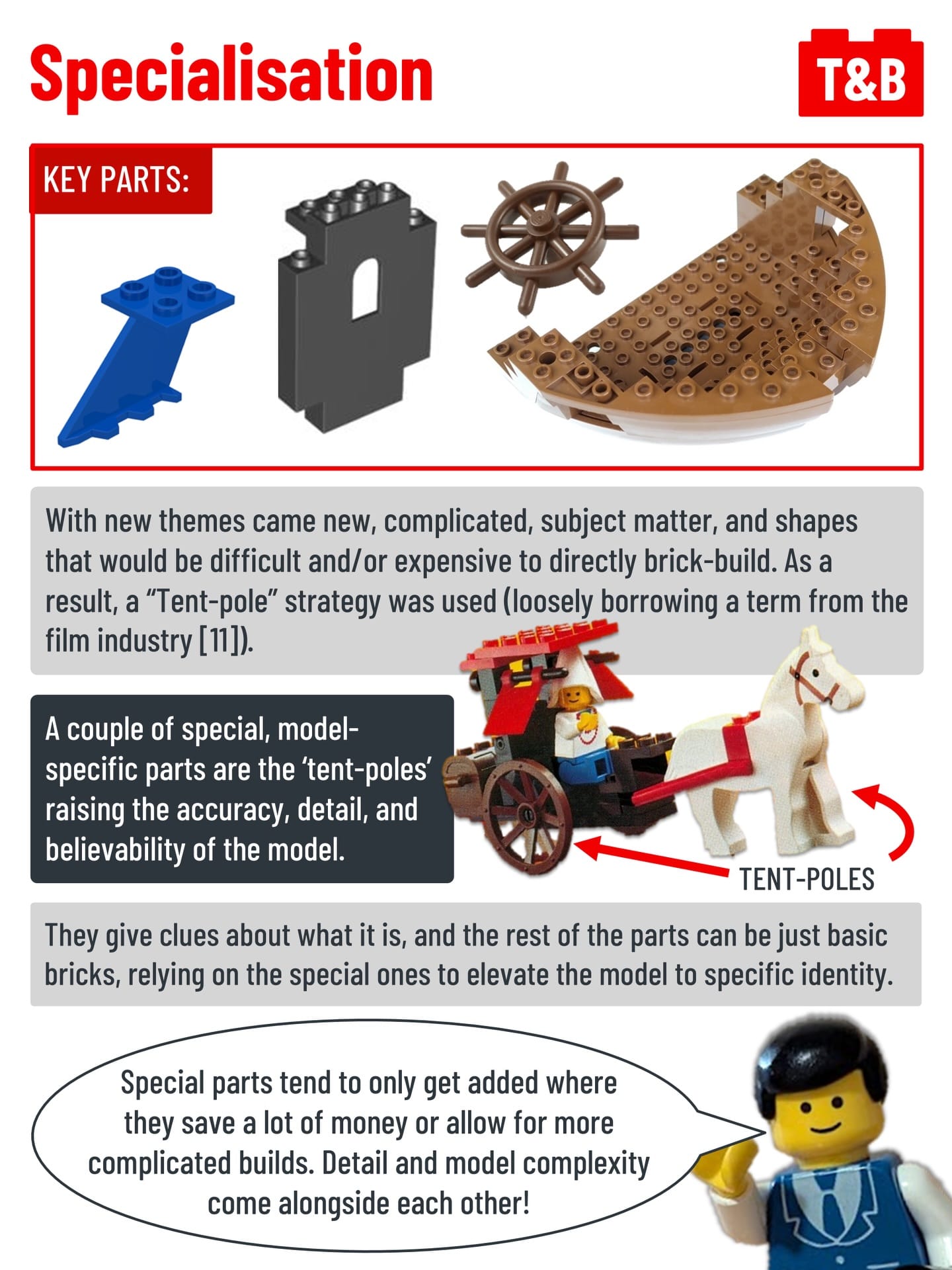
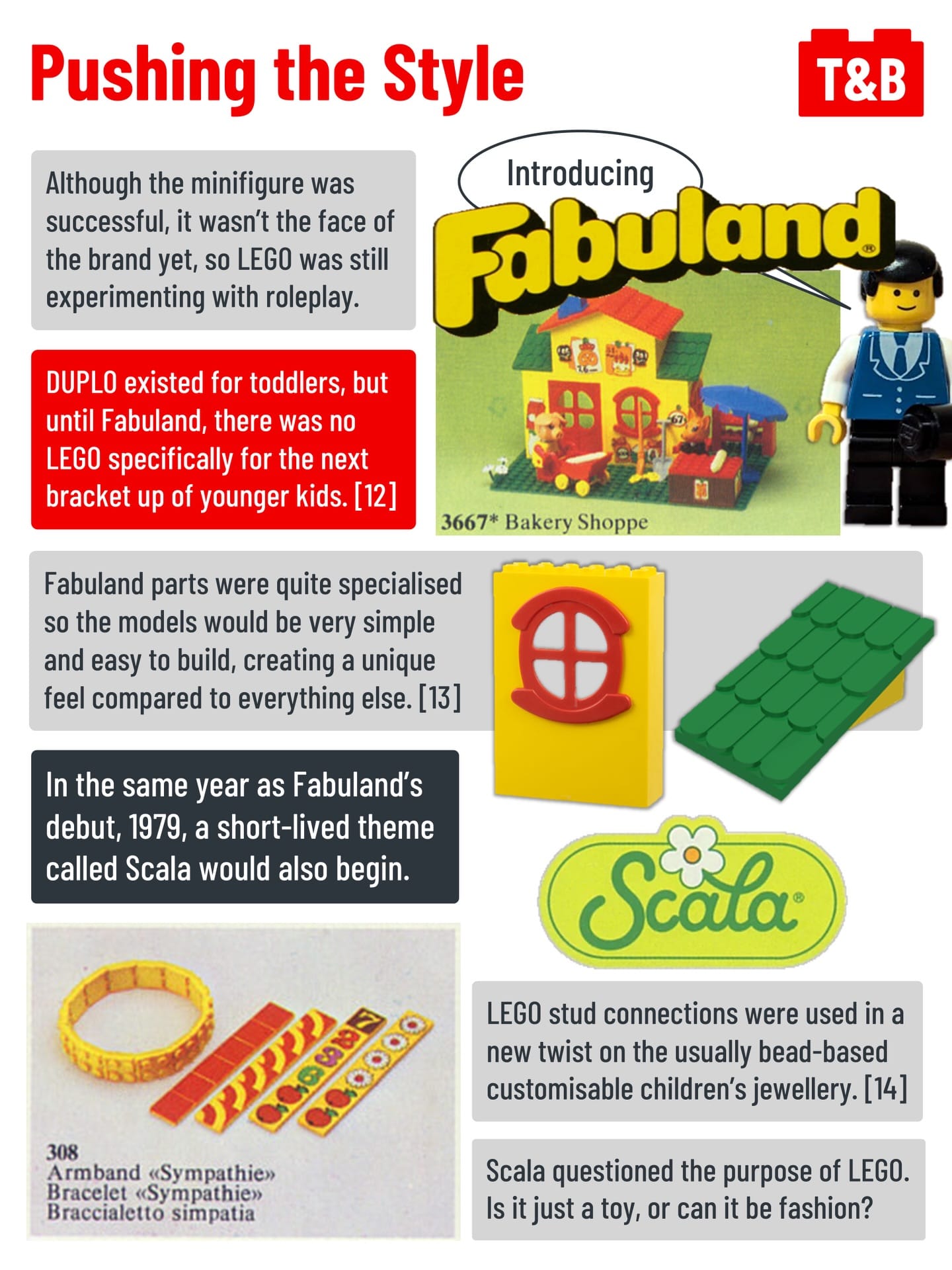
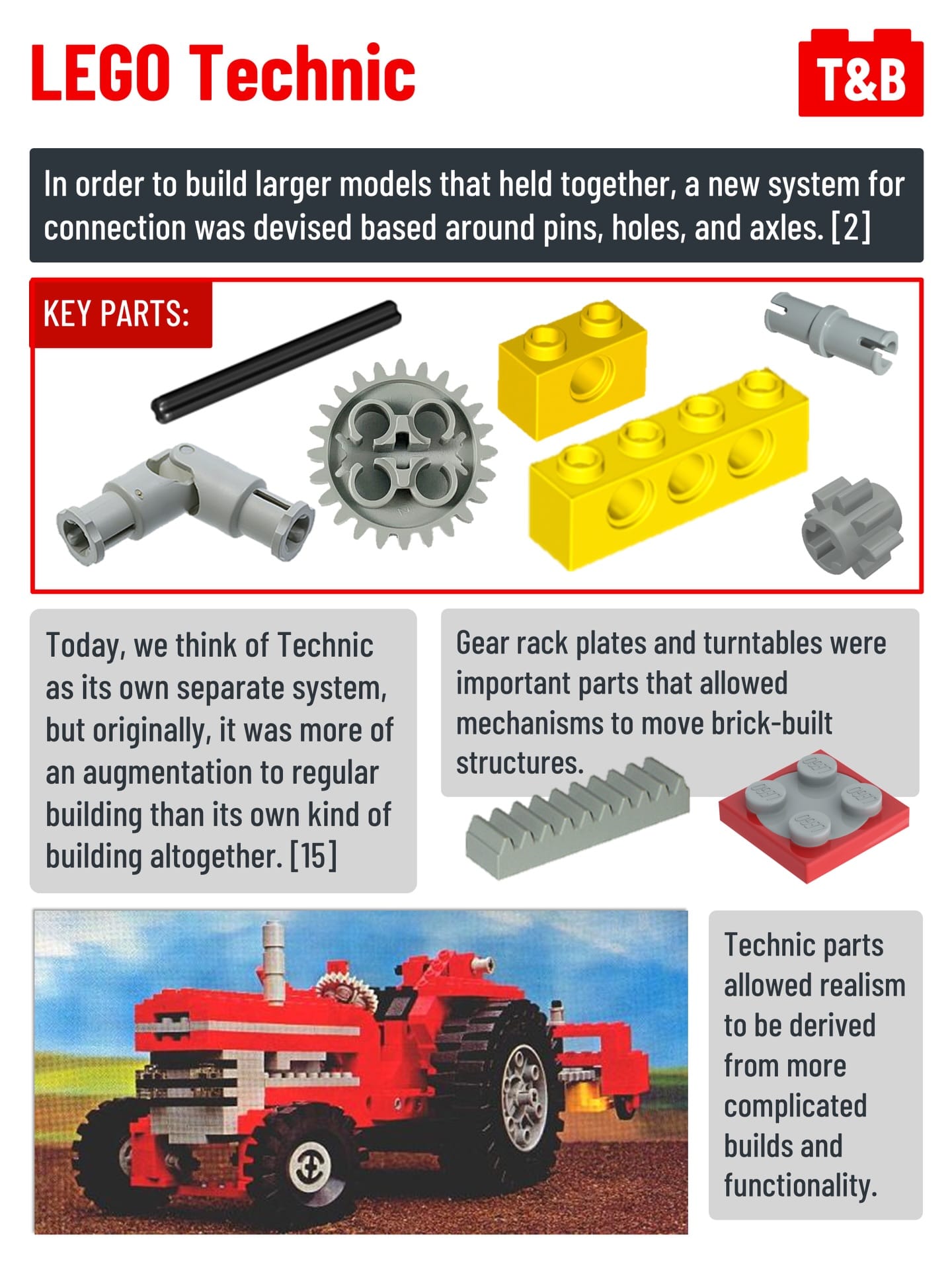
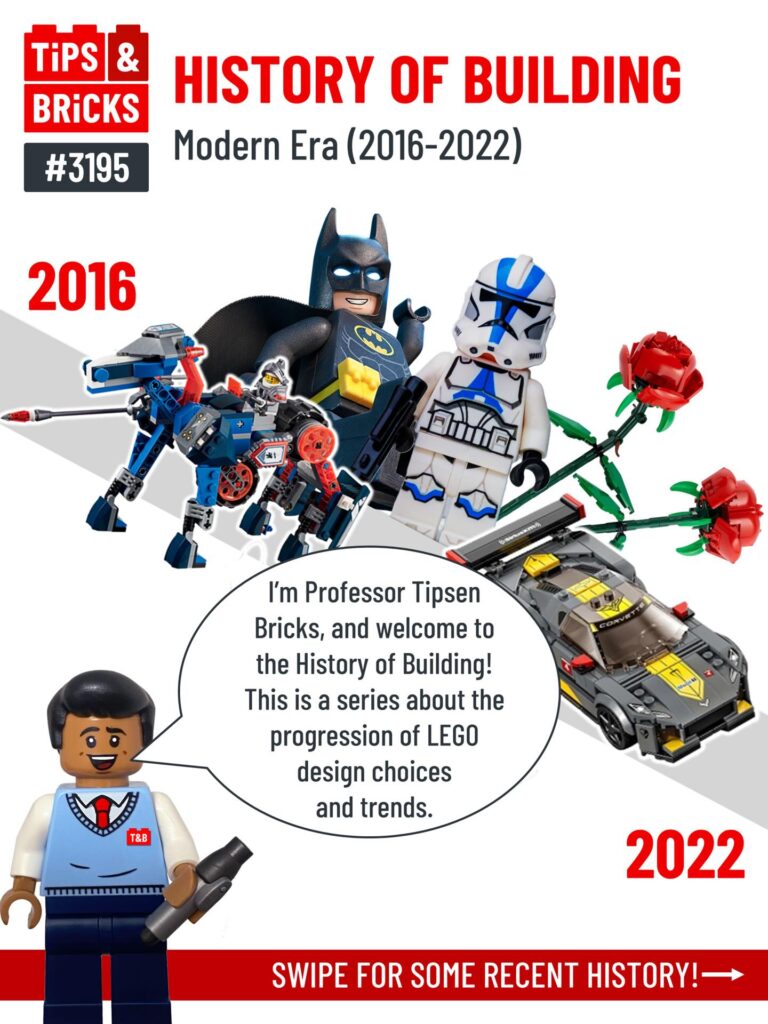
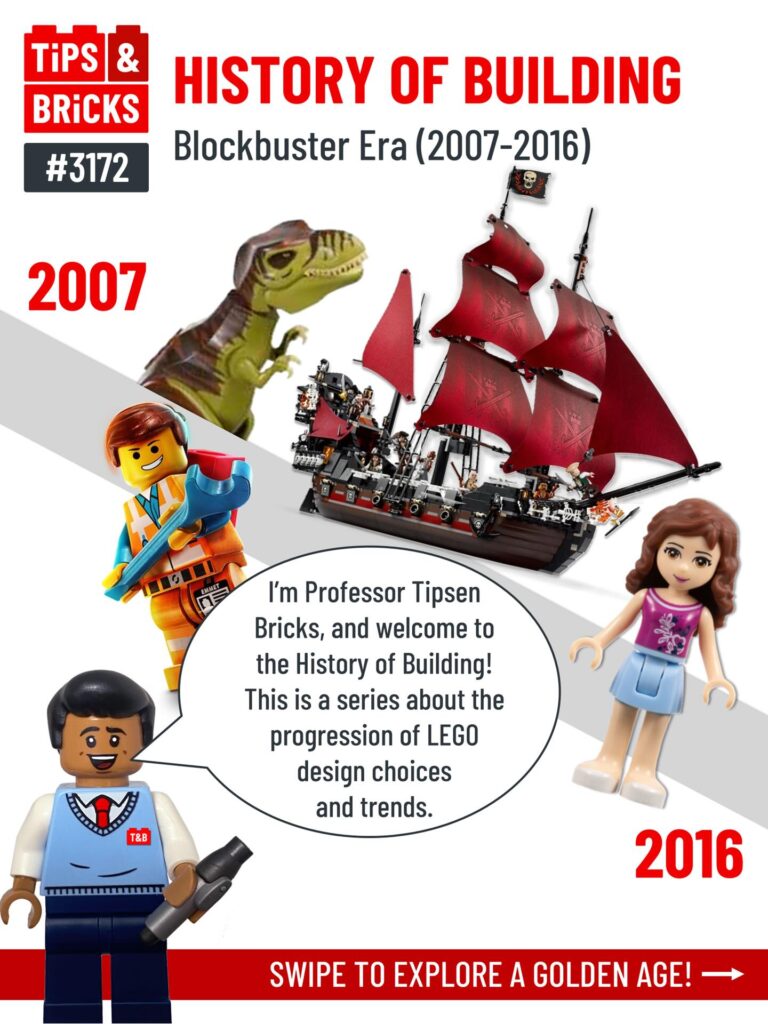
In this series we’re charting the progression of LEGO building, and offering ideas about why and how things worked the way they did, splitting it up into distinct eras through observation of trends. Today’s post is about the most iconic period in LEGO’s history: the Classic era. You know this era. It had blank yellow smile faces, simple Technic sets, Fabuland, and, of course, the immortal themes of Castle, Space, and Pirates. When LEGO does nostalgia bait, they almost always do it for this time period, but why is that?
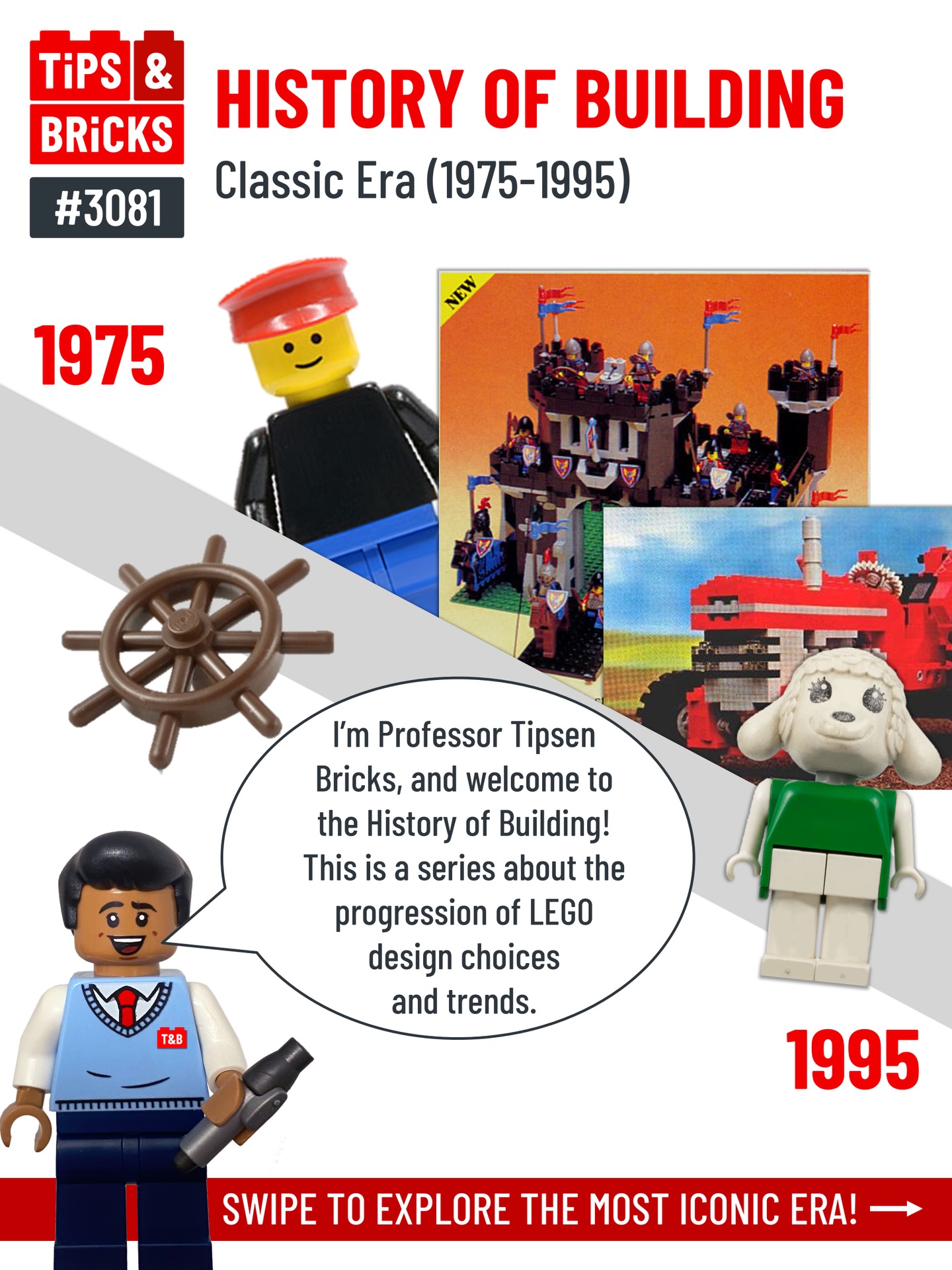
The Classic era is when LEGO took their simplistic style and added just enough specialisation to the versatile system to make it feel advanced and detailed, but still clean and basic. Read on to explore the art form of simplicity and its application across colours, minifigures, model sizing, and more.
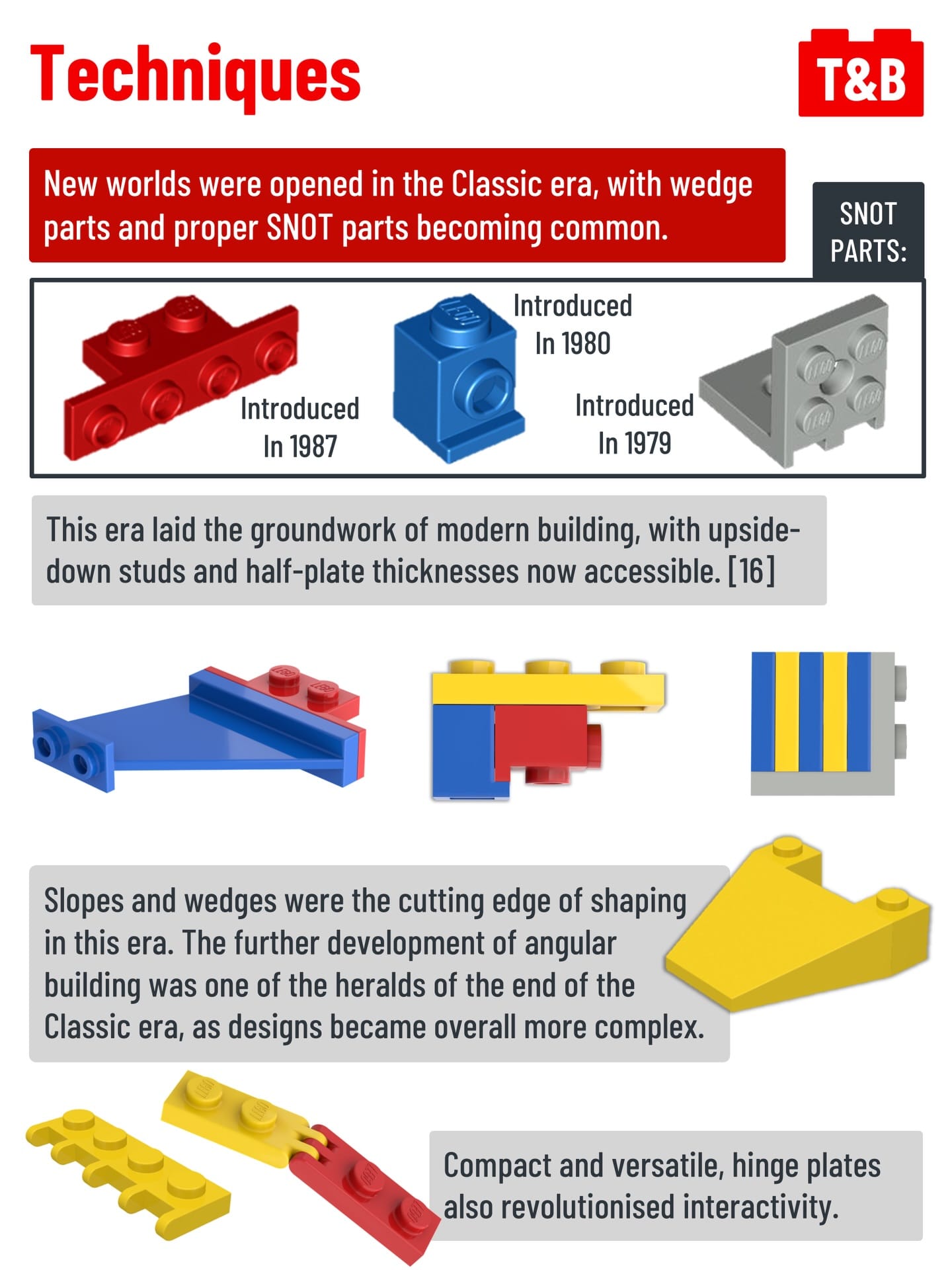
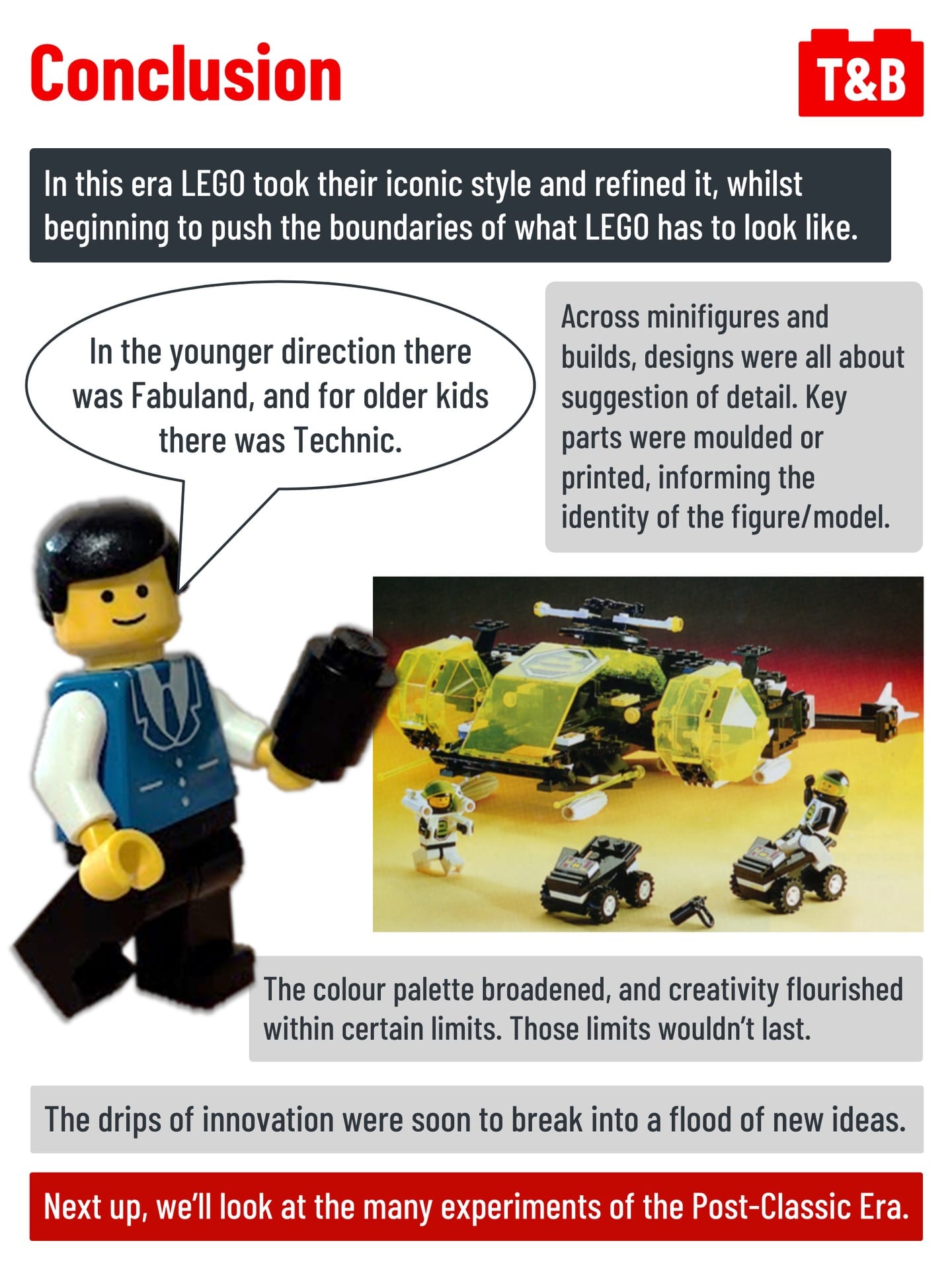
But how did this era come to an end? The peripheral experiments of the 80s became more numerous and mainstream in the 90s. Combine that with the introduction of more interesting, less blocky, parts, allowing shaping to become more complicated, and a new time of new styles and less simplicity would soon be on the horizon.